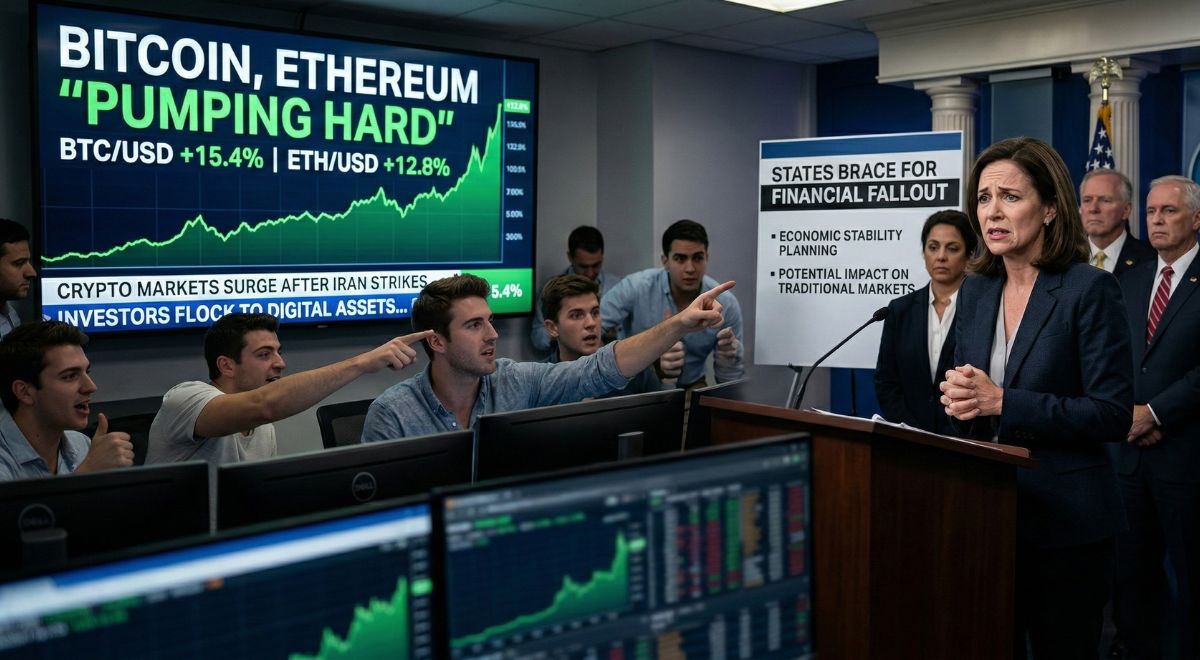
Major cryptocurrencies reacted with dramatic price swings following a sudden escalation of geopolitical tensions in the Middle East, as the United States and Israel launched military strikes on targets in Iran.
Table of Contents
ToggleCrypto Markets Bounce Back After Turmoil
After an initial sell-off over the weekend, both Bitcoin and Ethereum recovered strongly, triggering what many traders described as a “pump” in prices amid easing fears of an extended conflict.
According to market trackers:
- Bitcoin rebounded to around $67,000 in early trading after plunging as low as ~$63,000 immediately following the strikes. At one point, BTC briefly traded above $68,000 after reports confirmed that Iran’s Supreme Leader Ayatollah Ali Khamenei had been killed in the attacks.
- Ethereum climbed back toward $2,000, rising more than 6 % in the latest 24-hour trading session after earlier losses.
Crypto commentators on social platforms like X noted that the rebound suggested traders believe the geopolitical fallout might be limited and not pose long-term damage to global markets — at least in the near term.
This resilience has been framed by some analysts as a sign that cryptocurrencies are “disconnected from broader risk assets,” given that digital assets trade 24/7 even when traditional stock markets are closed. Investors who sell riskier assets in stock markets during major events can still transact in crypto, which may help rapid rebounds.
The Weekend Sell-Off: Fear and Liquidations
The early reaction to the strikes was sharply negative across the crypto arena:
- Bitcoin plunged nearly 6–8 % within hours of the news, briefly dipping below the $64,000 mark as panic selling intensified.
- Ethereum and other major altcoins also sold off, with Ethereum dipping toward $1,840 before the recovery.
- Over hundreds of millions of dollars in leveraged positions were liquidated, as traders with long bets on Bitcoin and Ethereum were forced out of positions amid the volatility.
These movements echo typical patterns seen when global geopolitical risk spikes — markets initially ‘dump’ risk assets like crypto and equities, while traditional safe havens such as gold and government bonds attract fresh inflows.
Officials and Financial Regulators Are Cautious
While traders in the digital asset space celebrated the rebound, financial authorities in some countries are sounding alarms about broader market risks.
In South Korea, top financial regulators convened emergency meetings to assess the potential economic impact. They cautioned that if the conflict escalates or drags on, it could strain stock markets — especially where retail investors are heavily exposed — and trigger more pronounced sell-offs or bargain hunting behaviors.
Globally, central banks and finance ministries are watching energy markets closely, given that disruptions in the Gulf region often translate into higher oil prices, inflation concerns, and tighter monetary conditions that could curtail risk appetite among investors.
What Comes Next?
Cryptocurrency markets will be closely watched when traditional markets reopen. Analysts warn that true price discovery for both Bitcoin and crypto-related ETFs may unfold once U.S. equity markets resume trading after the holiday weekend.
The knee-jerk recovery so far suggests traders are betting that the conflict will be short-lived or contained — but if geopolitical uncertainty deepens, prices could quickly retest lower levels. Meanwhile, regulators and policymakers are preparing contingency plans to respond to broader financial repercussions if risk assets begin to wobble under prolonged strain.