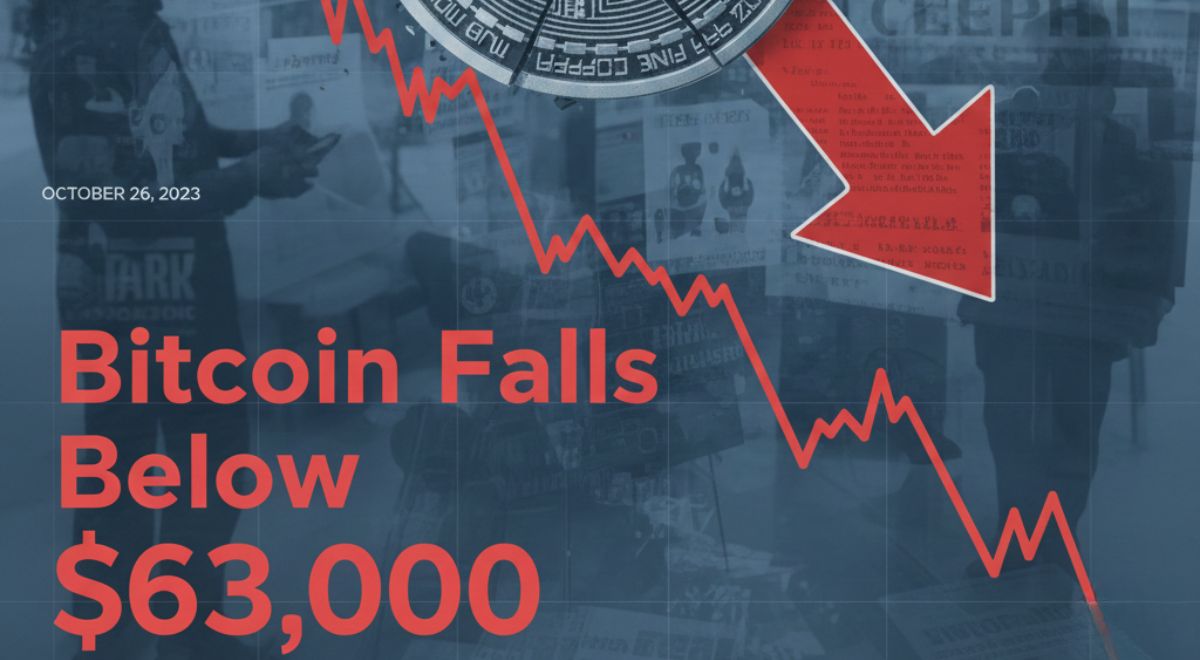
Bitcoin dropped below the $63,000 mark this week, as rising global trade tensions and mounting geopolitical uncertainty sparked a wave of risk-off sentiment across financial markets. The world’s largest cryptocurrency experienced renewed selling pressure, reflecting investor concerns over economic stability and shifting monetary expectations.
Table of Contents
ToggleTariff Fears Shake Market Confidence
Fresh tariff announcements and the threat of escalating trade disputes between major global economies have unsettled investors. Historically, trade tensions tend to push markets toward safer assets, such as gold and government bonds. While Bitcoin is sometimes viewed as “digital gold,” it continues to behave like a high-risk asset during periods of macroeconomic stress.
As fears over higher import costs and slower global growth intensified, investors trimmed exposure to volatile assets, including cryptocurrencies. The broader digital asset market mirrored Bitcoin’s decline, with several altcoins also recording notable losses.
Geopolitical Risks Add to Volatility
In addition to trade concerns, ongoing geopolitical conflicts and diplomatic tensions have added another layer of uncertainty. Global markets often react sharply to unexpected developments, and cryptocurrencies — known for their price sensitivity — were no exception.
Rising energy prices, supply chain disruptions, and regional instability have further dampened investor appetite for speculative investments. The combined effect has been increased volatility across both traditional financial markets and digital assets.
Institutional Activity and Market Liquidity
Institutional investors have played a larger role in Bitcoin’s recent price movements. As large funds rebalance portfolios in response to global risk factors, crypto markets can experience swift price swings. Lower liquidity during uncertain periods can amplify these declines.
Analysts suggest that while short-term sentiment remains cautious, long-term fundamentals such as adoption, blockchain innovation, and regulatory clarity could support recovery once macroeconomic pressures ease.
What Comes Next?
Market watchers are closely monitoring global trade negotiations, central bank policies, and geopolitical developments. Any signs of de-escalation could stabilize markets and encourage renewed interest in digital assets.
For now, Bitcoin’s drop below $63,000 highlights how interconnected the cryptocurrency market has become with broader global economic trends. As uncertainty persists, volatility is likely to remain a defining feature of the crypto landscape.