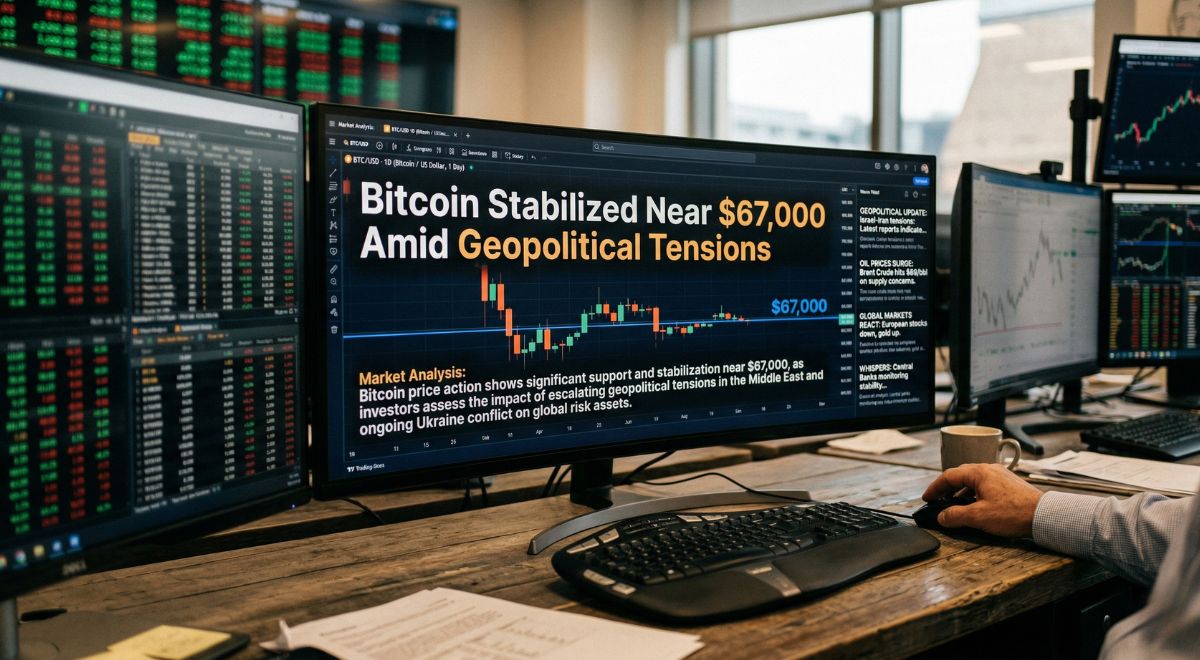

Global cryptocurrency markets faced renewed volatility this week as Bitcoin slipped back toward the $65,000 level, pressured by a combination of geopolitical instability in the Middle East and rising concerns over quantum computing threats. Analysts are calling this convergence a “double shock”—one that is shaking investor confidence across both traditional and digital asset markets.
Table of Contents
ToggleGeopolitical Tensions Trigger Risk-Off Sentiment
Escalating tensions in the Middle East have once again pushed investors toward safer assets, triggering a classic risk-off environment. Reports of potential cyber and physical attacks on critical infrastructure—including data centers and tech hubs—have amplified uncertainty in global markets.
Cryptocurrencies, often seen as high-risk assets during periods of instability, reacted swiftly. Bitcoin, which had been trading near recent highs, saw a sharp pullback as traders reduced exposure and moved capital into more stable instruments like gold and the U.S. dollar.
Market sentiment indicators also showed a spike in fear levels, with trading volumes rising during sell-offs—suggesting panic-driven activity rather than strategic repositioning.
Quantum Computing Concerns Add New Pressure
While geopolitical risks are not new to crypto markets, a more unusual factor is now entering the equation: quantum computing.
Recent advancements and discussions around quantum capabilities have reignited fears that future quantum systems could potentially break current cryptographic security protocols. Since Bitcoin and most blockchain systems rely heavily on encryption, the idea of quantum vulnerability is creating long-term uncertainty.
Although practical quantum threats are still years away, the narrative itself is enough to influence investor psychology. Institutional investors, in particular, are closely monitoring developments, as any credible risk to blockchain security could fundamentally alter the value proposition of cryptocurrencies.
A “Double Shock” for Investors
The combination of immediate geopolitical instability and longer-term technological risk has created a rare dual pressure point for Bitcoin:
- Short-term shock: Middle East tensions driving volatility and capital flight
- Long-term concern: Quantum computing threatening blockchain security foundations
This “double shock” is forcing both retail and institutional investors to reassess risk exposure in crypto portfolios.
Market Outlook: Temporary Dip or Deeper Correction?
Despite the current pullback, many analysts remain cautiously optimistic about Bitcoin’s long-term trajectory. Historically, Bitcoin has shown resilience during global crises, often rebounding strongly after periods of uncertainty.
Key levels to watch include:
- $65,000 support zone: A critical psychological and technical level
- $60,000 downside risk: If tensions escalate further
- $70,000 recovery target: If sentiment stabilizes
The broader crypto market is also expected to follow Bitcoin’s lead, with altcoins experiencing even sharper volatility due to lower liquidity.