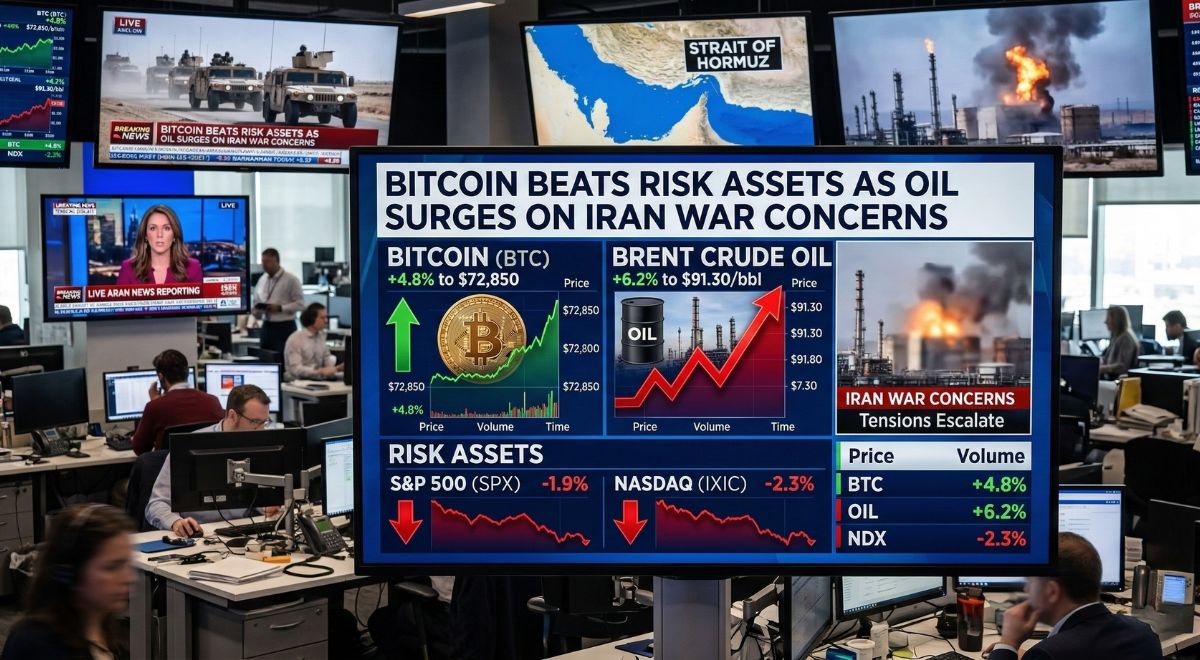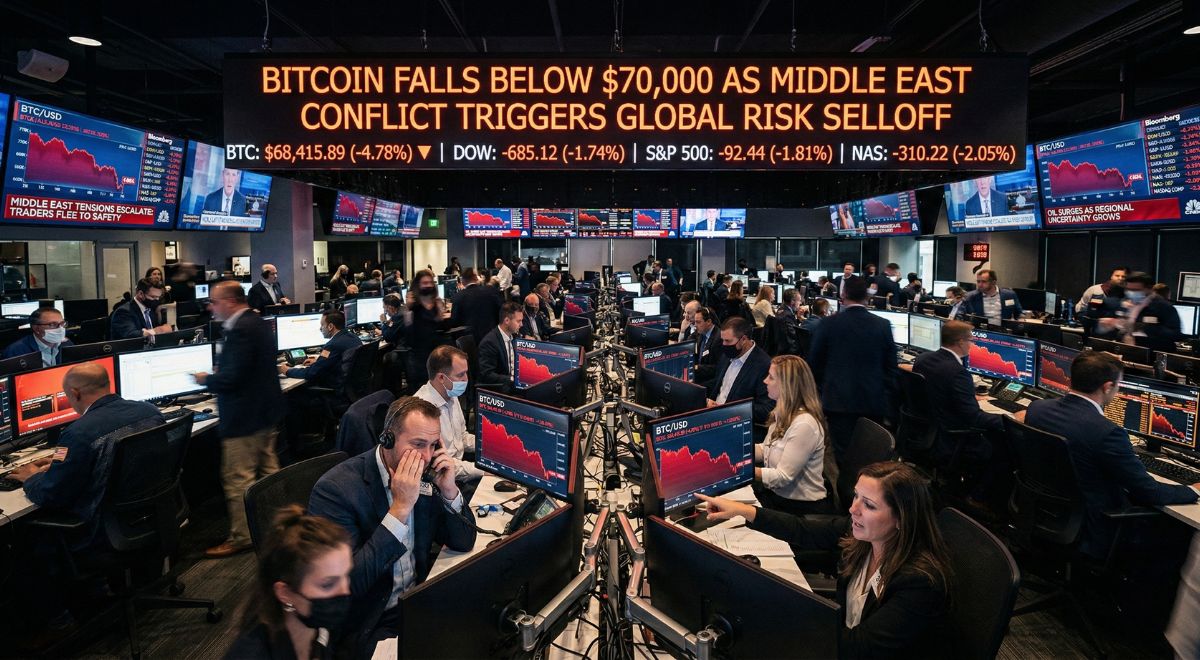
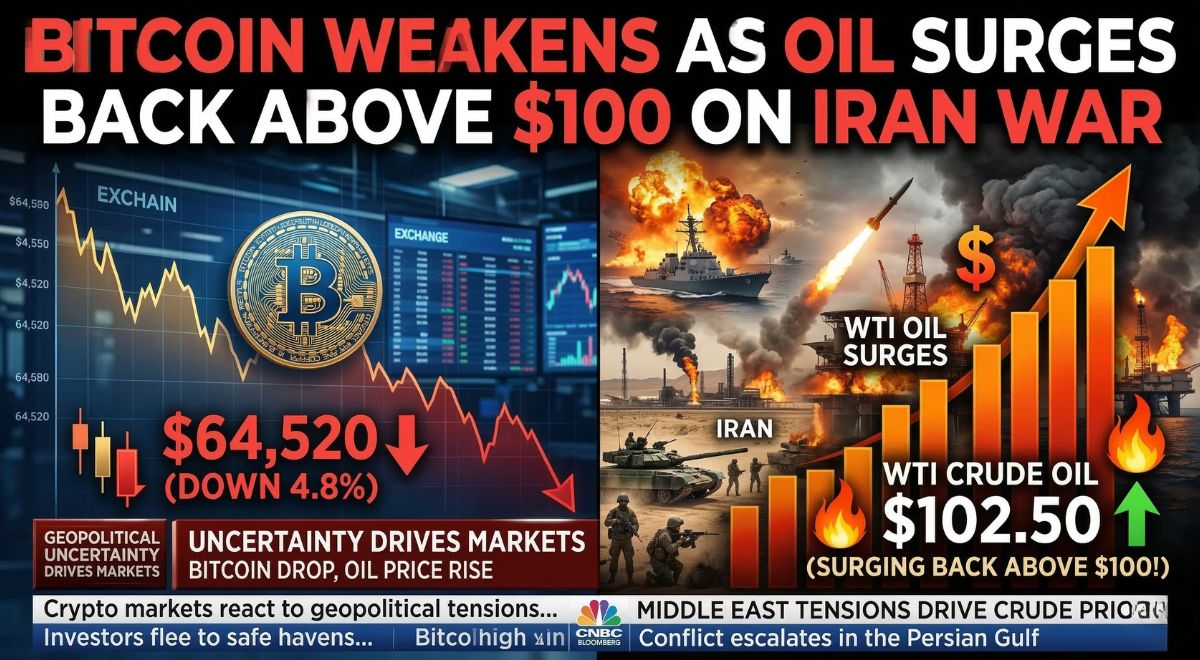
Bitcoin weakened on Thursday as oil prices surged back above the crucial $100-per-barrel mark, driven by fresh geopolitical tensions stemming from the ongoing U.S.–Israel war with Iran and renewed attacks on oil infrastructure and shipping in the Gulf. The developments have reignited fears of prolonged energy supply disruptions, triggering defensive positioning across traditional and digital markets.
The world’s largest cryptocurrency slipped as much as 2%, retracing recent gains as commodity markets absorbed fresh risk premiums tied to the conflict. Analysts noted that rising crude prices and broader risk‑off sentiment have pressured Bitcoin alongside other risk assets.
At the same time, oil markets sold off earlier in the week following tentative signals that the conflict might ease, but renewed attacks on tankers and Gulf shipping have pushed crude back above $100 a barrel — a psychological threshold that intensifies inflation fears and market uncertainty.
Oil marketing stocks also felt the squeeze, with major energy sector shares sliding as traders priced in persistent supply concerns. Iran’s warning that crude prices could surge further — even toward $200 per barrel in a prolonged standoff — added to market unease.
Table of Contents
ToggleWhy This Matters: Risk Sentiment and Correlations
Traditionally, Bitcoin has often behaved like a risk asset, moving in line with equities and broad market sentiment rather than serving as a “safe haven” like gold. In times of geopolitical escalations, this correlation can amplify downside pressure as traders reduce exposure to volatile assets.
The surge in oil threatens to feed into global inflation expectations, potentially slowing economic growth and fueling defensive positioning among investors — a backdrop that can be hostile to high‑beta assets such as cryptocurrencies.
Recent Market Twists
Just a day earlier, Bitcoin had shown resilience, holding near the $69,000–$70,000 range and even managing modest gains despite energy market turmoil, underscoring the complexity of current market dynamics. However, the fresh spike in oil reversed those short‑lived positive moves.
Oil’s rebound is driven by several key factors, including attacks on tankers in the Gulf and disruptions to shipping through the Strait of Hormuz, a choke point for roughly 20% of global crude exports. This has renewed fears of severe supply bottlenecks if the conflict persists.
Outlook: Uncertain and Volatile
Market participants are now closely watching geopolitical developments for signs of escalation or de‑escalation, as both outcomes could dramatically shift price trajectories for oil, Bitcoin, and risk assets. Any further deterioration of the Iran war could reinforce inflationary pressures and keep defensive flows elevated, while signs of conflict resolution could ease energy prices and offer relief for stocks and crypto alike.
Bottom Line: Bitcoin’s recent weakness amid an oil price rebound reflects the heightened influence of macroeconomic and geopolitical risks on digital assets. As crude remains sensitive to developments in the Middle East, traders are bracing for continued volatility across markets.