
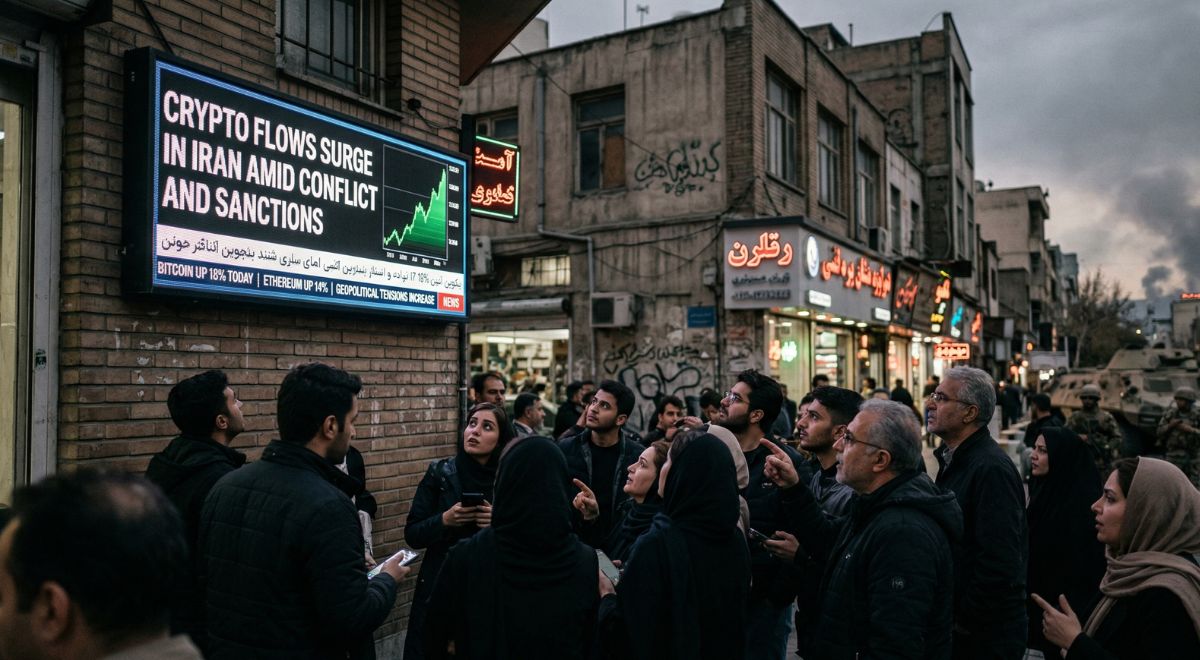
The intersection of geopolitical conflict and economic sanctions has accelerated the adoption of cryptocurrencies in Iran, transforming digital assets into both a financial lifeline for citizens and a strategic tool for the state. As tensions escalate and traditional financial systems remain restricted, crypto flows linked to Iran have surged significantly—drawing global attention and regulatory scrutiny.
Table of Contents
ToggleA Growing Parallel Financial System
Iran’s economy has long been constrained by international sanctions that limit access to global banking networks. In response, cryptocurrencies have emerged as an alternative channel for cross-border transactions and wealth preservation. Estimates suggest that Iran’s crypto activity reached between $8 billion and $11 billion in 2025, reflecting widespread usage among both individuals and institutions.
For ordinary citizens, crypto offers protection against inflation and the depreciation of the Iranian rial. For the state and affiliated entities, however, blockchain technology has become a mechanism to bypass sanctions, facilitate trade, and access foreign markets.
Conflict-Driven Spikes in Activity
Recent military escalations have triggered sharp increases in crypto flows. Following U.S.–Israeli strikes in early 2026, blockchain data revealed immediate and dramatic movements of funds. In one instance, more than $2 million in crypto left Iranian exchanges within an hour, eventually surpassing $10 million in outflows within days.
Some analyses indicate that Bitcoin withdrawals surged by as much as 700% in a short period, highlighting how quickly digital assets are mobilized during crises. These movements reflect both panic-driven capital flight by individuals and strategic repositioning by larger entities.
Sanctions Evasion and State Involvement
Beyond retail usage, there is growing evidence that sanctioned organizations—particularly Iran’s Islamic Revolutionary Guard Corps (IRGC)—are deeply embedded in the crypto ecosystem. Reports indicate that over $3 billion in crypto transactions were linked to IRGC-associated networks in 2025 alone.
Globally, sanctioned entities collectively accounted for $104 billion in crypto flows, underscoring how digital assets are increasingly used to circumvent financial restrictions. These funds are believed to support activities ranging from procurement of goods to financing regional proxy groups.
Stablecoins and Global Access
Stablecoins, particularly those pegged to the U.S. dollar, have become a key component of Iran’s crypto strategy. They provide a relatively stable medium for international transactions, allowing users to bypass volatile local currency conditions and restrictive banking systems.
However, this reliance also introduces vulnerabilities. Authorities in the U.S. and allied countries have intensified efforts to monitor and restrict crypto-based sanctions evasion, targeting exchanges, wallets, and blockchain infrastructure linked to Iranian networks.
A Double-Edged Sword
While crypto enables financial resilience, it also exposes Iran to new risks. Internet shutdowns, regulatory crackdowns, and exchange disruptions during periods of conflict can temporarily limit access to digital markets. In some cases, authorities have even intervened to slow trading or restrict certain crypto pairs to manage volatility.
At the same time, enforcement agencies describe the situation as a “high-speed game of whack-a-mole,” as new wallets and networks quickly emerge to replace those that are sanctioned or blocked.