A new digital era is emerging as Web3 social networks transform how we connect, share, and own our online presence. Platforms like Farcaster are at the forefront of this movement, offering users true ownership of their data and identities — a clear challenge to the dominance of traditional, centralized social media giants.
Table of Contents
ToggleA Shift Toward User Ownership
Unlike conventional platforms where data is controlled by a single corporation, Web3 social networks distribute power across their communities. They encourage permissionless innovation, allowing anyone to build on existing protocols without needing approval. This creates a fairer, more open social ecosystem where wealth, data, and influence are more evenly shared.
Understanding the Web3 Social Stack
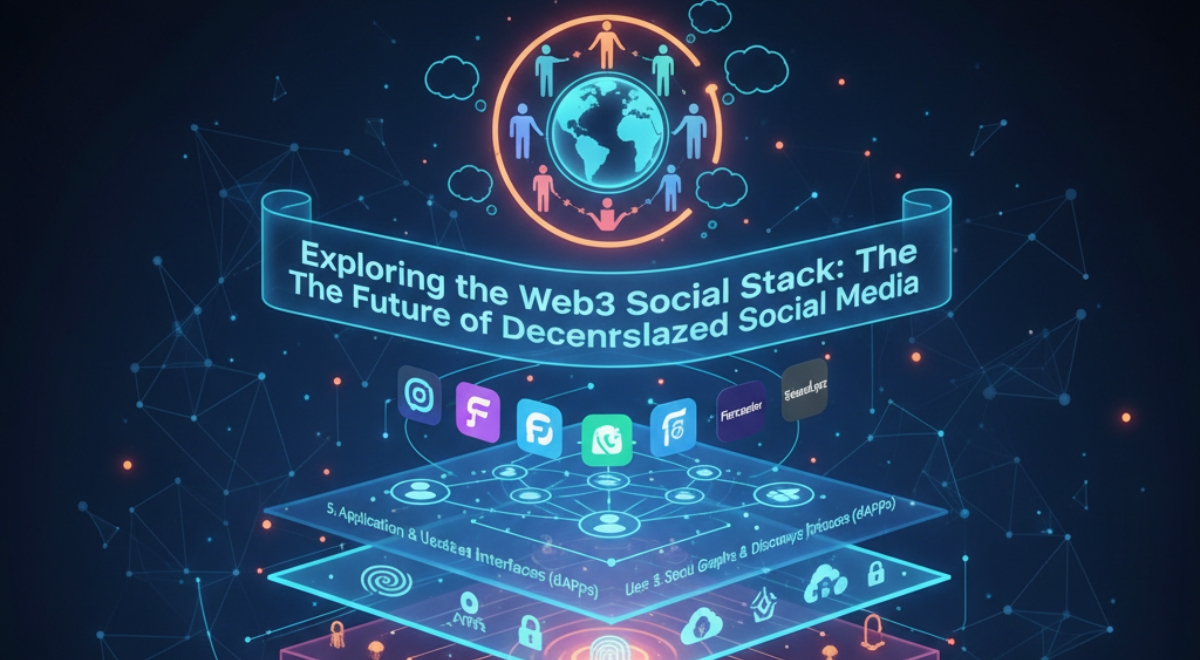
The Web3 social stack is built on four key layers:
- Hosting Layer: Powered by blockchains and decentralized storage systems, ensuring data security and transparency.
- Social Primitives: Core components that define relationships, communication, and user identity within the network.
- Profile Layer: Enables users to carry their digital identity and data seamlessly across different platforms.
- Application Layer: User-facing platforms that integrate these technologies to create social experiences.
Together, these layers establish the foundation of a decentralized social ecosystem — open, interoperable, and controlled by its users.
Farcaster: Redefining Digital Interaction
Farcaster serves as a leading example of what Web3 social media can achieve. It operates as a decentralized social protocol similar to email, where no single entity owns the system. Users can decide where their data is hosted and can migrate freely without losing their identity or followers.
Built on the Ethereum blockchain, Farcaster maps each user’s wallet address to a unique username — represented as a non-fungible token (NFT). This design ensures that digital identities remain user-owned, independent of any specific app or service. Developers are encouraged to build new clients and tools, driving innovation and diversity within the ecosystem.
The Promise of Decentralized Social Media
Web3 platforms such as Farcaster, Lens, and DeSo are redefining social networking by giving control back to the community. They allow direct creator-audience relationships, prevent monopolistic control, and promote open development.
This new model empowers users to transfer their social capital — followers, reputation, and data — across different apps, ensuring no single platform can dominate. As adoption grows, value will shift toward the underlying protocols, creating a more equitable and user-driven digital economy.
Looking Ahead
While Web3 social networks are still evolving, their impact on the digital landscape is already visible. They offer a vision of social media that is transparent, user-owned, and interoperable, standing in contrast to the closed systems of Web2.