
Photo Credit : cryptonews
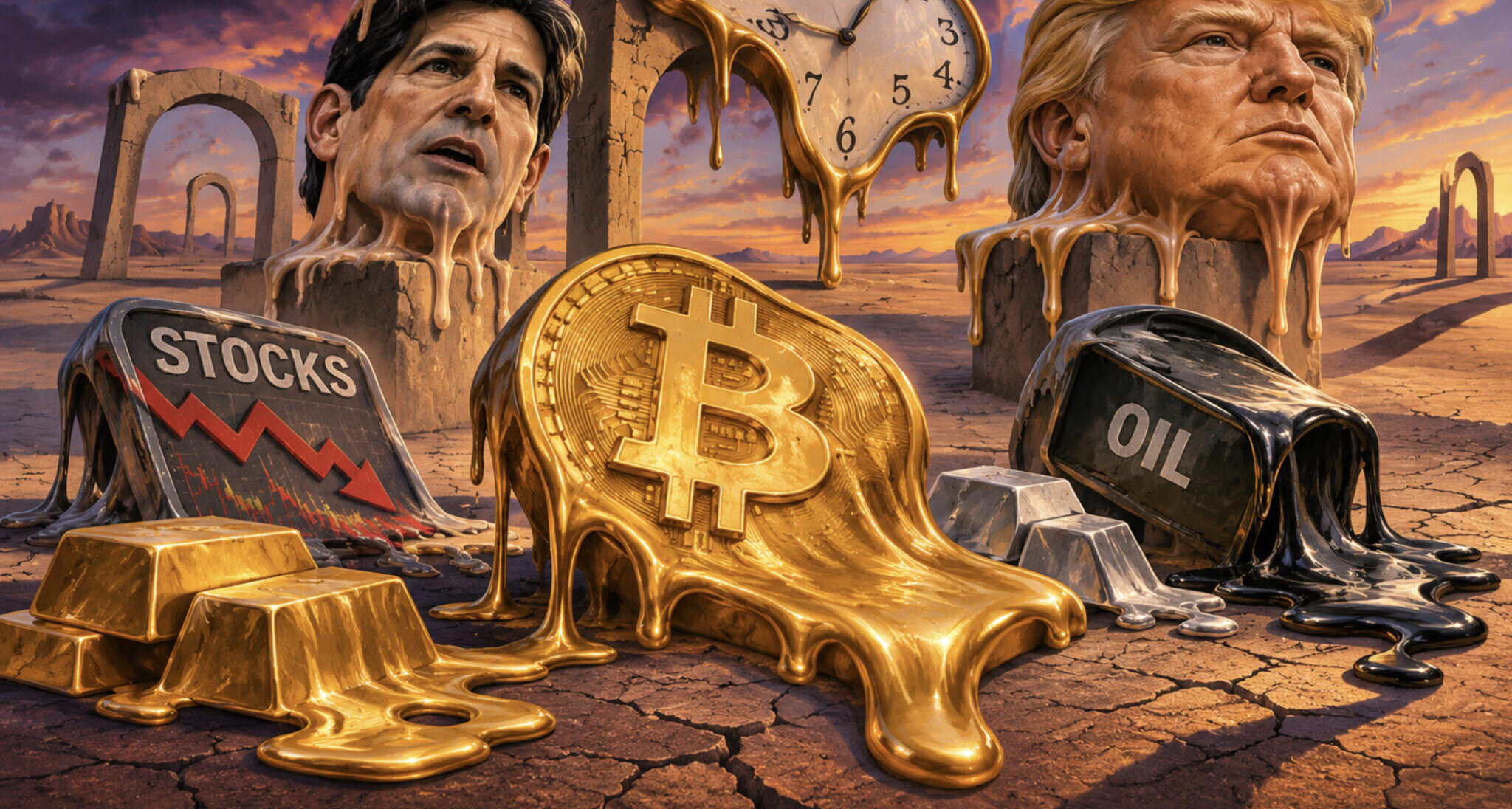
Bitcoin, gold and oil prices came under renewed pressure following the release of the Federal Reserve’s October meeting minutes, as policymakers signalled that further interest rate increases could remain necessary to control inflation.
The minutes revealed that almost all Federal Open Market Committee (FOMC) participants considered additional rate hikes appropriate under their baseline economic outlook. Two officials also suggested that a larger-than-usual increase could be necessary if inflation remained higher than expected.
The comments unsettled financial markets. Bitcoin fell approximately 3.2% over 24 hours, while gold futures declined by more than 3%. West Texas Intermediate (WTI) crude oil also lost around 3%. Meanwhile, the US dollar strengthened to its highest level in 19 months.
Wall Street recorded mixed results, with the Nasdaq ending higher while the Dow Jones Industrial Average and S&P 500 closed lower.
The latest market movements have revived comparisons with March 2020, when the Federal Reserve and US government introduced unprecedented emergency measures to stabilise financial markets and support the economy.
However, the current situation presents a different challenge. Rather than cutting interest rates and injecting liquidity, the Federal Reserve is considering whether tighter monetary policy may be needed to contain persistent inflation.
Table of Contents
ToggleFed Minutes Highlight Inflation and Financial Stability Risks
The Federal Reserve maintained its benchmark interest rate at 3.75%–4% during its October meeting. However, the minutes showed that policymakers remained concerned about inflation and were not ruling out further monetary tightening.
Two officials indicated that a rate increase exceeding the standard 25-basis-point adjustment could be considered if incoming inflation data proved stronger than anticipated.
Beyond monetary policy, officials also highlighted potential vulnerabilities involving hedge fund leverage and the growing debt associated with artificial intelligence investments.
Concerns are increasing over whether substantial investments in AI infrastructure and technology will generate the returns companies and investors currently expect. If confidence weakens, heavily leveraged investors could face financial pressure.
This could trigger forced asset sales, particularly if funds experience significant losses or investor withdrawals. Such selling could increase market volatility and accelerate declines across different asset classes.
Gold is also facing pressure from the stronger US dollar and elevated interest rates, which can reduce its appeal compared with interest-bearing investments. Bitcoin, meanwhile, remains exposed to shifts in investor appetite for higher-risk assets.
Despite these concerns, the Federal Reserve has not declared a financial emergency. The meeting minutes described the US banking system as resilient, although officials acknowledged risks that could amplify a potential market downturn.
March 2020: When the Fed and Washington Launched a $2.2 Trillion Rescue
The market environment in March 2020 was dramatically different.
As COVID-19 lockdowns disrupted businesses and economic activity, investors rushed to secure cash, triggering a sharp sell-off across global financial markets. Bitcoin, which had traded near $10,000 just weeks earlier, briefly dropped below $4,000.
The Federal Reserve responded with aggressive monetary easing.
On March 3, 2020, it reduced interest rates by 50 basis points, followed by another emergency 100-basis-point reduction on March 15. The federal funds target range fell to 0%–0.25%.
The central bank subsequently announced unlimited purchases of US Treasury securities and mortgage-backed securities on March 23, committing to buy whatever amounts were necessary to support market functioning.
It also introduced emergency lending programmes designed to maintain credit availability and prevent financial disruptions from spreading throughout the economy.
Meanwhile, the US government approved a $2.2 trillion economic relief package to support households, businesses and workers affected by the pandemic.
The combined response represented one of the largest emergency interventions in modern US economic history.
The question now is whether another major market downturn could eventually prompt policymakers to consider similarly extraordinary measures, even as the Federal Reserve currently appears focused on controlling inflation rather than stimulating economic growth.