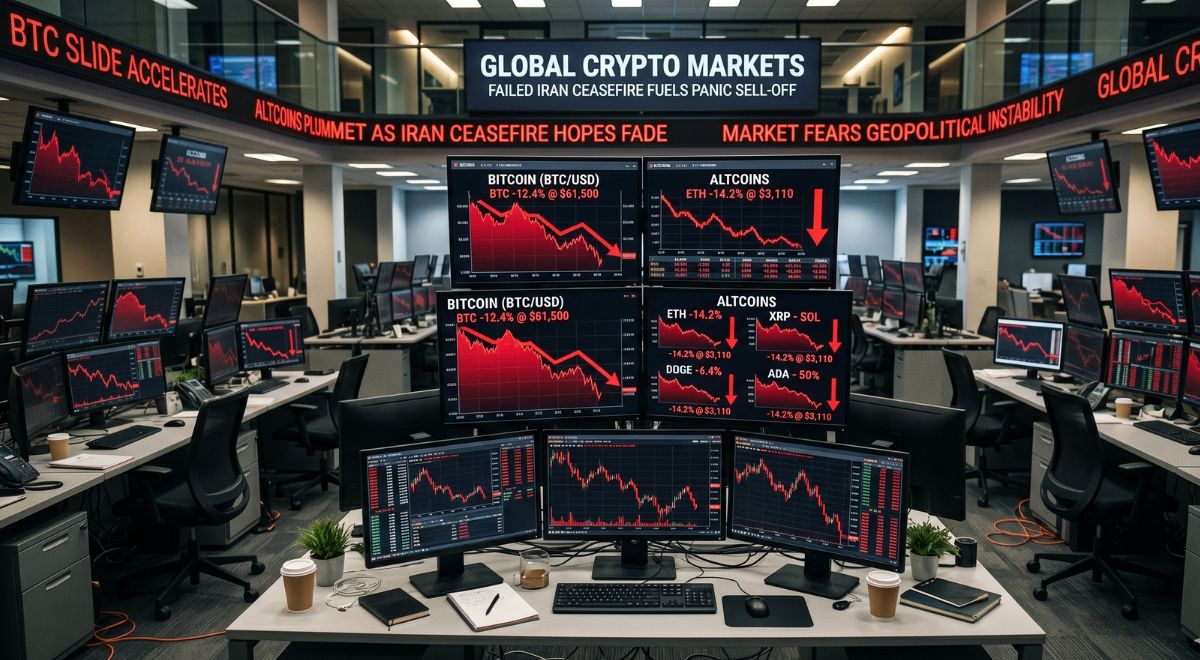
The cryptocurrency market remained under pressure this week as renewed geopolitical tensions in the Middle East weakened investor confidence, dragging major digital assets lower despite emerging hopes for a temporary ceasefire between the United States and Iran.
Table of Contents
ToggleBitcoin Faces Pressure Amid Escalating Middle East Risks
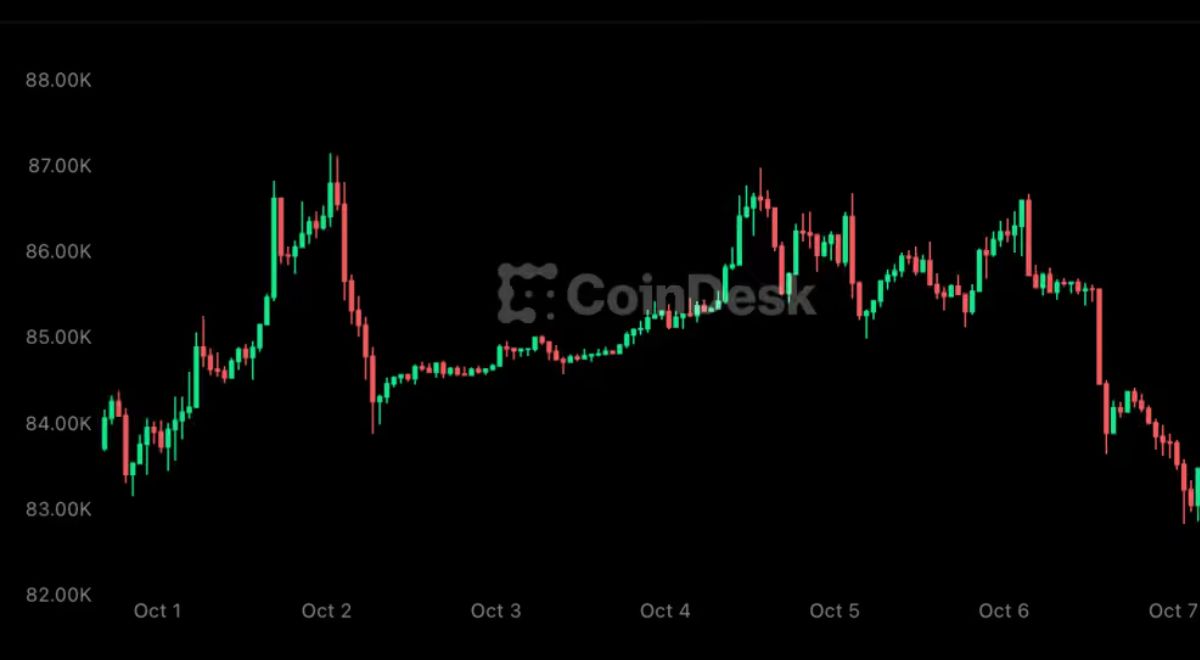
Bitcoin briefly fell below the $73,000 mark after risk sentiment deteriorated across global markets. As of May 29, Bitcoin traded at $73,268.50 on Binance’s USDT market, down 1.3% over the previous 24 hours.
The decline followed reports of increased military activity involving the United States and Iran. On May 27, US Central Command confirmed airstrikes targeting Iranian military positions, describing the operation as defensive. Reports also indicated that US forces intercepted four Iranian suicide drones and struck a drone-launch facility near Bandar Abbas, close to the strategically important Strait of Hormuz.
Iran’s Islamic Revolutionary Guard Corps later claimed responsibility for attacks on US military bases and warned of stronger retaliation if further strikes occur. The escalation weighed heavily on risk assets, including cryptocurrencies, pushing Bitcoin below key technical support levels.
Markets later found some relief after Axios reported that US and Iranian negotiators had reached a tentative framework for a 60-day ceasefire and renewed nuclear discussions. The proposal reportedly includes guarantees for safe navigation through the Strait of Hormuz, although final approval from US President Donald Trump remains pending.
Despite the ceasefire optimism, investors remain cautious. US Treasury Secretary Scott Bessent stated that Iran must commit to denuclearization and ensure unrestricted passage through the Strait of Hormuz, signaling that negotiations remain unresolved.
Technical analysts continue to warn of downside risks. NewsBTC analyst Aayush Jindal said Bitcoin remains in a short-term bearish phase after losing support near $75,000. According to his outlook, a break below $74,000 could expose further downside toward $73,500, $73,200 and potentially $72,000. Meanwhile, Cointelegraph analyst Rakesh Upadhyay said a recovery above $77,431 could revive bullish momentum and open the path toward $82,000 and $84,000.
Ethereum Extends Decline Below $2,000
Ethereum also weakened this week, briefly falling below the psychologically important $2,000 level for the first time in nearly two months. As of May 29, Ether traded at $2,005.79 on Binance, down 0.42% from the previous day.
Investor sentiment has been hurt by public selling from several high-profile Ethereum supporters. David Hoffman, co-host of crypto media platform Bankless, revealed he had sold all of his Ether holdings, arguing that Ethereum’s investment growth had slowed despite the expansion of its Layer 2 ecosystem.
Former Ethereum core developer Eric Conner also disclosed that he had significantly reduced his ETH exposure over the past two years, citing prolonged underperformance compared to other crypto assets.
Derivatives data further highlighted bearish positioning in the market. Ethereum futures open interest recently surged to a record $32.5 billion while spot prices dropped more than 4%, slipping below the $2,000 threshold. According to BlockBeats, the combination of rising open interest and falling prices suggests aggressive leveraged short activity.
Institutional sentiment has also deteriorated. Data from SoSoValue showed that US spot Ethereum ETFs recorded approximately $522.97 million in monthly outflows, adding further pressure to the market.
Analysts remain cautious on the near-term outlook. Market intelligence platform Santiment warned that retail traders may be becoming excessively optimistic after the dip below $2,000, increasing the risk of further downside volatility.
Crypto analyst Ali Martinez identified $1,850 as Ethereum’s next major support level, warning that a weekly close below that zone could accelerate selling. For a bullish reversal, Ether would need to reclaim the 200-week moving average near $2,500 and break above the 50-week moving average around $3,100, he added.
XRP Volatility Intensifies as Investor Sentiment Weakens
XRP also came under heavy selling pressure this week, briefly dropping into the $1.20 range before staging a modest recovery. As of May 29, XRP traded at $1.3124 on Binance’s USDT market, up 2.12% over the past 24 hours.
Data from Santiment showed that XRP investors’ average 30-day return, measured by MVRV, had fallen to around negative 47%, marking the lowest reading since December 2020. The decline indicates that a large share of XRP holders are currently sitting on losses.
Santiment noted that repeated price corrections have intensified fear and fatigue among investors, triggering increased stop-loss selling from short-term traders.
On-chain data from CryptoQuant also pointed to strong selling activity. XRP cumulative net taker volume on Binance reportedly dropped to approximately negative $83 million, suggesting that market sell orders continue to dominate buying activity.
Despite the weakness, some analysts believe XRP may be approaching a potential rebound zone. Santiment said similarly extreme fear levels in the past were followed by meaningful recoveries as panic selling eventually subsided.
However, analysts caution that XRP must maintain support near $1.29 for any sustained recovery attempt. Ali Martinez also noted that XRP network transactions above $1 million have declined more than 57%, indicating that whale investors remain cautious rather than aggressively accumulating.
Stellar Lumens Surges on DTCC Tokenization Speculation
Stellar emerged as one of the strongest performers in the altcoin market this week, rallying more than 35% over the past seven days on Binance and nearly 36% on South Korean exchange Bithumb. As of May 29, the token traded at $0.2022, up 18% on the day.
The rally was fueled by growing speculation surrounding potential collaboration with the Depository Trust & Clearing Corporation, widely known as DTCC.
According to CoinDesk, DTCC is exploring the use of asset tokenization on the Stellar blockchain, with initial deployment targeted for the first half of next year. Reports suggest the initiative could involve tokenized versions of traditional financial assets, including US Treasuries and major stock indexes.
The development aligns with Wall Street’s increasing interest in real-world asset tokenization. Major financial firms including BlackRock and Franklin Templeton have already expanded their presence in the sector.
Still, analysts warn that Stellar’s sharp gains could leave the token vulnerable to volatility, especially as DTCC has yet to confirm the exact scope or commercialization timeline of any blockchain deployment.