Escalating tensions in the Middle East are heightening concerns across global financial markets, as investors grapple with growing risks to key energy shipping routes and the prospect of persistently higher borrowing costs.
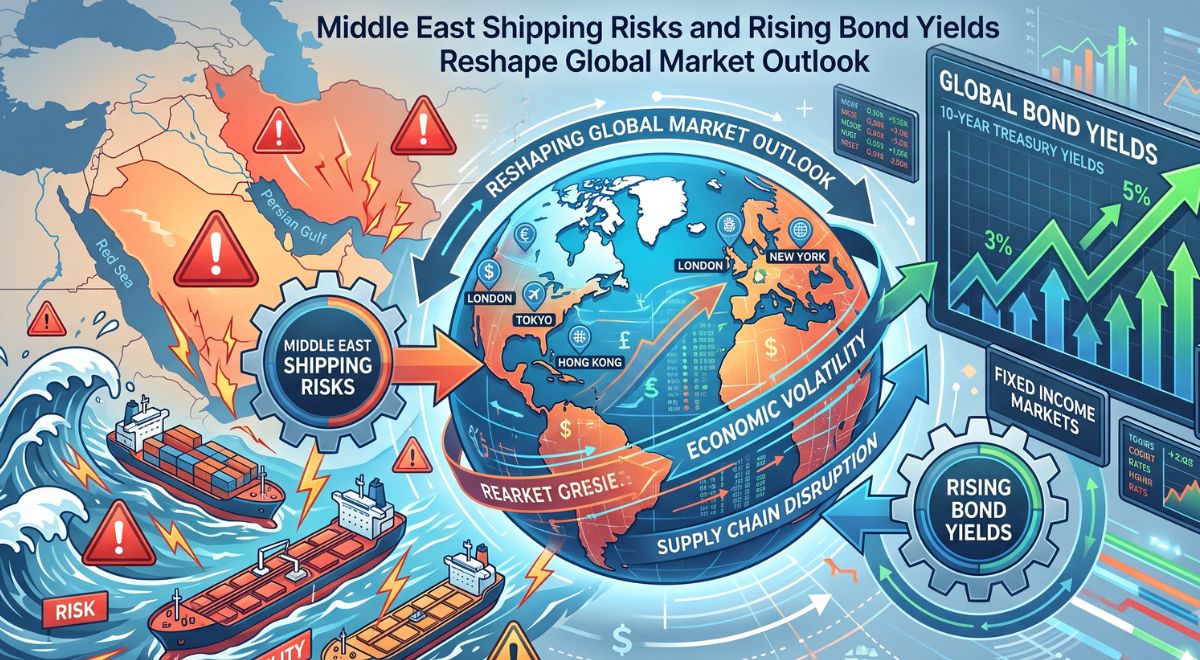
According to HuoXing Finance, the region has shifted from a single maritime chokepoint risk to a dual-threat scenario, with both the Strait of Hormuz and the Bab el-Mandeb Strait in the Red Sea facing mounting military pressure. Iran and Yemen’s Houthi forces have intensified threats to commercial shipping, while the United States has responded by deploying additional special forces, fighter aircraft, and long-range bombers to the region.
Analysts say the broader market concern extends beyond rising crude oil prices. The increasing risk to global shipping lanes is expected to drive up transportation and insurance costs, adding structural inflationary pressure to global energy markets. As Brent crude moves closer to the $95-per-barrel mark, investors are increasingly viewing higher prices as a reflection of geopolitical risk premiums rather than short-term supply and demand dynamics.
The energy-driven inflation outlook is also influencing expectations for central bank policy. While the European Central Bank is widely expected to leave interest rates unchanged this week, markets have begun pricing in the possibility of another rate hike in September following the recent surge in energy prices. In Japan, policymakers remain open to further monetary tightening as a weaker yen fuels imported inflation.
In the United States, softer June inflation data briefly eased expectations of an immediate Federal Reserve rate increase. However, uncertainty surrounding future policy has grown, with interest rate swap markets now fully pricing in a 25-basis-point rate hike by the end of September as investors assess whether higher energy prices will keep inflation elevated.
Bond markets are also signaling growing investor caution. Yields on 30-year U.S. Treasury bonds have remained above 5%, marking levels rarely seen in nearly two decades. Economists attribute the sustained rise to expanding fiscal deficits, increasing financing requirements for artificial intelligence infrastructure, and persistent inflation concerns. Reduced foreign demand for long-term U.S. debt and a preference among domestic investors for shorter-duration bonds have further added to upward pressure on borrowing costs.
At the same time, rapidly expanding investment in artificial intelligence is expected to increase competition for capital. Major technology companies continue to boost spending on AI infrastructure, with increased long-term borrowing likely to compete directly with U.S. Treasury debt for investor funds. Analysts believe the combined financing demands of government borrowing and AI expansion could keep long-term interest rates elevated for an extended period.
Trade policy is adding another layer of uncertainty. The Trump administration is reportedly preparing a new round of Section 301 tariffs on multiple economies while simultaneously extending tariff exemptions for generic pharmaceuticals in an effort to limit domestic price increases. However, economists warn that if elevated oil prices coincide with additional tariff-related costs, inflation could remain more persistent than current market expectations.
Market participants increasingly view the combination of energy supply risks and tighter funding conditions as a challenging environment for risk assets. Higher transportation costs, elevated inflation, and sustained long-term borrowing costs are expected to make it more difficult for equity valuations to expand, encouraging investors to favor shorter-duration assets and companies with stable cash flows.
Analysts suggest that while the possibility of oil surpassing $100 per barrel remains closely watched, an equally significant development would be the establishment of 30-year U.S. Treasury yields above the 5% level. Such a shift could trigger a broader repricing of global financial assets by raising the long-term discount rate used across markets.