
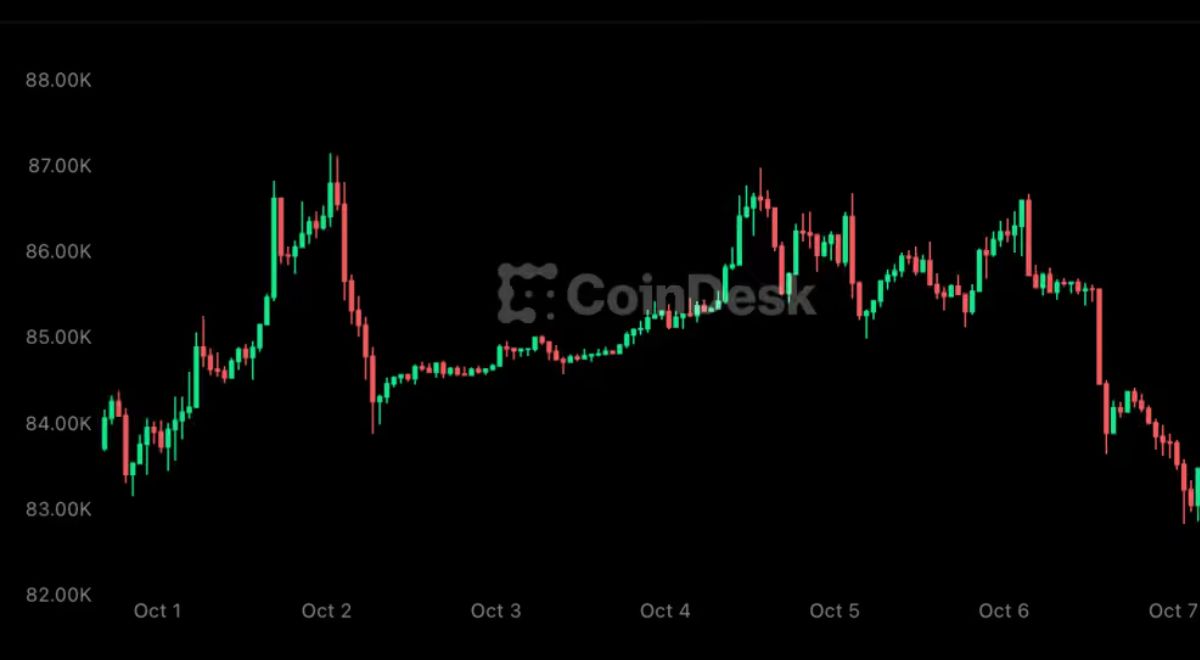
Photo Credit:coindesk
Bitcoin fell below the $83,000 level on Thursday, extending its recent decline as surging oil prices, rising US Treasury yields and renewed geopolitical tensions surrounding Iran weighed on investor appetite for risk assets.
The world’s largest cryptocurrency dropped around 1.6% to just below $82,800 during Asian trading hours, putting it beneath a key technical level that analysts had been closely monitoring.
The decline was accompanied by broader weakness across the cryptocurrency market, with XRP, Dogecoin, Ether, Solana and several other major digital assets recording losses.
XRP, Ether and Solana Lead Broader Crypto Losses
XRP was among the weakest major cryptocurrencies, falling nearly 4% to around $1.42.
Dogecoin declined approximately 3% to below $0.09, while Ether dropped about 3% to roughly $2,570.
HYPE and Solana each lost more than 2%, while Zcash slipped less than 1%.
BNB and TRX were notable exceptions to the wider sell-off, with both cryptocurrencies posting gains of less than 1%, according to CoinDesk data.
The broad decline highlights growing caution among investors as macroeconomic and geopolitical pressures increase across global financial markets.
Bitcoin Breaks Important $83,000 Support
Bitcoin’s move below $83,000 has attracted particular attention from technical analysts.
FxPro had previously identified the level as an important support zone, saying a decisive break below it could indicate that sellers had taken control of the market.
The brokerage said earlier this week that a move beneath $83,000 could potentially open the way for Bitcoin to fall toward $80,000 relatively quickly.
The latest decline therefore places renewed focus on whether buyers can defend the $80,000 area or whether selling pressure could accelerate further.
$550 Million in Leveraged Crypto Positions Liquidated
The latest weakness follows a significant wave of liquidations across cryptocurrency derivatives markets.
Around $550 million in leveraged cryptocurrency positions were liquidated in the previous trading session, according to CoinGlass data.
Most of those liquidations affected traders who had positioned for further increases in cryptocurrency prices.
Large-scale liquidations can intensify market declines because exchanges automatically close leveraged positions when traders no longer have sufficient collateral to cover their losses.
This process can create additional selling pressure during periods of rapid market volatility.
Oil Climbs Above $102 Amid Iran Concerns
The pressure on cryptocurrency markets coincided with another sharp increase in crude oil prices.
Brent crude climbed around 2% to above $102 per barrel as traders reacted to reports that the White House had requested military strike options against Iran.
Energy markets were also affected by disruptions to US oil production caused by severe weather.
Adding to geopolitical concerns, Iran-backed Houthi rebels reportedly struck two airports in Saudi Arabia, resulting in three deaths.
The combination of geopolitical uncertainty and potential supply disruptions has pushed oil prices higher, reviving concerns about inflation and the outlook for global monetary policy.
Higher Oil Prices Push US Treasury Yields Up
Rising crude prices have also increased concerns that energy costs could keep inflation elevated.
The yield on the benchmark 10-year US Treasury rose two basis points to 5.31%, moving back toward levels not seen since the early 2000s.
Higher bond yields are generally considered negative for speculative assets because investors can receive more attractive returns from relatively lower-risk fixed-income securities.
Bitcoin and other cryptocurrencies can therefore face increased selling pressure when Treasury yields rise sharply.
The relationship has been particularly visible during Bitcoin’s latest decline, with its two most recent losing sessions coinciding with increases in both oil prices and government bond yields.
Global Stocks Retreat From Record Levels
Weakness was not limited to cryptocurrency markets.
US equity benchmarks pulled back on Wednesday after reaching record highs in the previous session.
Asian stocks followed Wall Street lower, declining around 1%, while MSCI’s All Country World Index fell approximately 0.2%.
The global index had earlier moved within about 1.5% of its record high but has since slipped further away as investors become more cautious.
The simultaneous weakness across cryptocurrencies and equities suggests investors are reducing exposure to risk-sensitive assets amid higher energy prices and bond yields.
Why Oil Prices Matter for Bitcoin
Oil has become an increasingly important factor for cryptocurrency traders because sustained increases in energy prices can influence inflation expectations.
If Brent crude remains above $100 per barrel, investors may become more concerned that inflation could remain elevated for longer.
That could reduce expectations for easier monetary policy from the US Federal Reserve and keep Treasury yields at high levels.
Both developments could weigh on Bitcoin because higher borrowing costs and tighter financial conditions generally reduce demand for speculative investments.
Conversely, a decline in Brent crude back below $100 per barrel, where it traded earlier this week, could ease some of the pressure on bond yields and improve sentiment toward cryptocurrencies.
Bitcoin Outlook: $80,000 Becomes Key Level
Bitcoin’s break below $83,000 leaves the cryptocurrency approaching another psychologically important support area around $80,000.
Traders are likely to closely monitor developments in the Middle East, crude oil prices and US Treasury yields for indications of Bitcoin’s next major move.
If oil continues rising and bond yields remain elevated, Bitcoin could face additional selling pressure.
However, an easing in geopolitical tensions or a decline in crude prices could improve risk sentiment and help Bitcoin recover some of its recent losses.
For now, the $80,000 level is likely to remain an important reference point as investors assess whether the latest decline represents a temporary correction or the beginning of a deeper pullback.