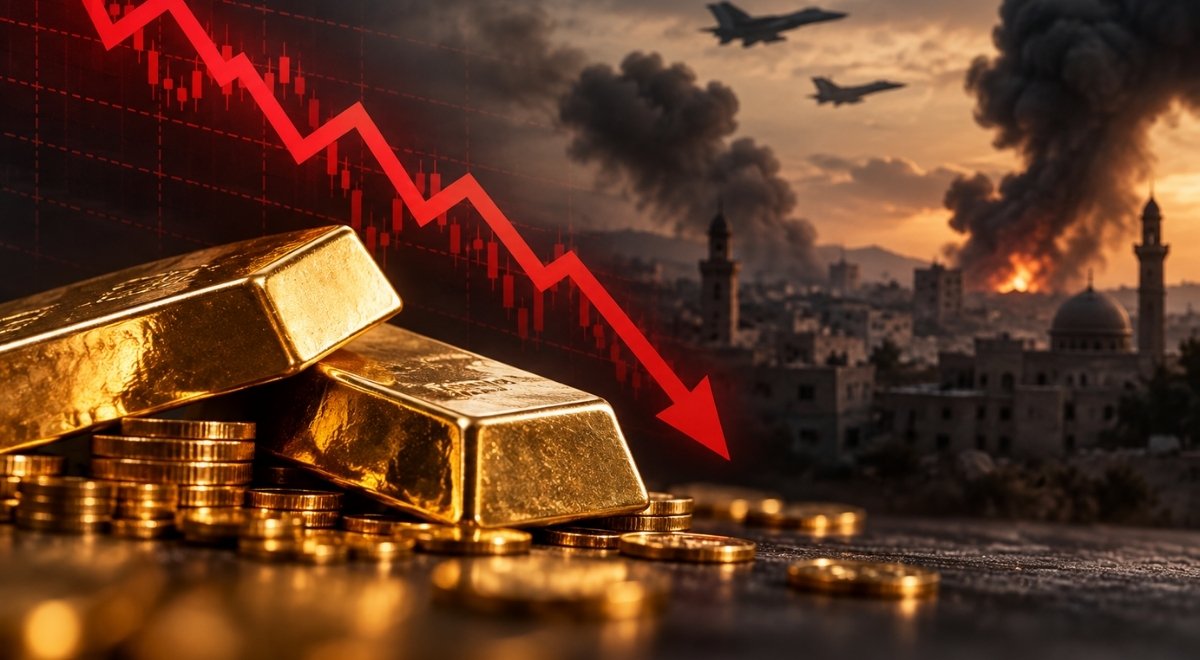
Gold prices fell sharply at the start of the week, dropping nearly 3% in early trading to around $4,150 an ounce as investors reassessed the outlook for the Middle East conflict and US monetary policy.
The decline comes as expectations for a diplomatic breakthrough between the United States and Iran have weakened. The conflict has contributed to elevated inflation expectations, complicating the outlook for interest rates and putting additional pressure on gold.
Hopes for a US-Iran understanding faded following the United Nations General Assembly meetings after President Donald Trump rejected an Iranian proposal to resume negotiations and reiterated demands concerning Tehran’s nuclear program. Although Axios reported that Trump could return to negotiations with Iran this week, financial markets showed little reaction, suggesting investors remain cautious about diplomatic signals.
Iran, meanwhile, appears unwilling to compromise on several key demands, including the removal of the US naval blockade, the unfreezing of overseas assets and maintaining its nuclear program. The Wall Street Journal reported that mediators have been pressing Tehran to make concessions to revive negotiations, but Iranian officials believe the country can withstand the blockade and potential renewed military strikes.
With Washington and Tehran maintaining sharply different positions, the region could remain in an uncertain state between open conflict and a lasting ceasefire. Periods of relative calm could continue to alternate with renewed escalation, creating further volatility in energy markets.
The United States is also seeking to maintain crude oil supplies from the region despite the conflict. Reuters reported that regional exports had reached nearly 13 million barrels per day this month, while an unnamed US official cited by Axios put the figure above 20 million barrels per day.
Continued oil flows could eventually limit further crude price increases. However, the risk of disruptions remains significant. Iran could seek to increase economic pressure by targeting shipping through the Strait of Hormuz or strengthening cooperation with the Houthis in Yemen. Any escalation could put oil production, export facilities and refining infrastructure at greater risk.
Such developments could keep a geopolitical risk premium embedded in energy prices while restricting investment flows from the Middle East and Asia. The resulting financial-market pressures could weigh further on gold and make a sustained recovery more difficult in the near term.
US economic data is also adding to pressure on the precious metal. Despite higher energy costs and elevated diesel prices, recent S&P Global Purchasing Managers’ Index data showed limited evidence of significant demand destruction caused by inflation.
A stronger-than-expected economic environment could give Federal Reserve policymakers greater scope to maintain or increase monetary tightening. CME FedWatch data indicated that markets were pricing roughly a 57% probability of a half-percentage-point Federal Reserve rate increase before the end of the year.
Higher interest-rate expectations have contributed to rising US Treasury yields, increasing the opportunity cost of holding a non-yielding asset such as gold. Combined with tighter liquidity conditions in parts of the Middle East and Asia, the factors are creating additional headwinds for bullion prices as investors navigate the uncertain outlook for both the conflict and global monetary policy.