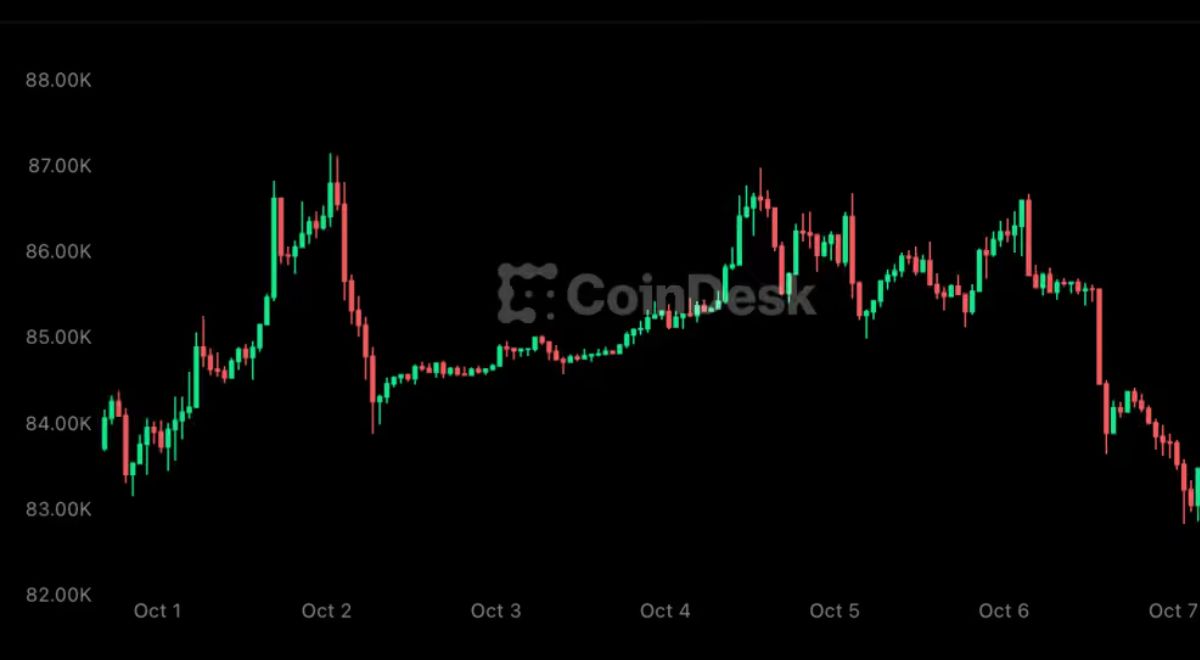

Bitcoin slipped back to around $64,000 after climbing to a monthly high of $65,500 on Wednesday, as traders locked in profits and broader market sentiment weakened amid escalating geopolitical tensions in the Middle East.
The pullback followed a strong rally earlier in the week, with bearish momentum returning across the cryptocurrency market. Altcoins also came under pressure, with PUMP and ZEC each declining 4.4% after their sharp gains on Tuesday faded, underscoring continued low liquidity and fragile market conditions.
Traditional financial markets mirrored the cautious sentiment. Futures tied to the Nasdaq 100 fell 0.25%, extending a month-long downward trend in technology-focused equities.
Market participants pointed to rising tensions in the Middle East as a key driver of risk-off sentiment after Iran reportedly launched attacks on U.S. military bases in neighboring Gulf states, while the United States continued its airstrike campaign in the region.
Ether also underperformed bitcoin, falling 1.7% since midnight UTC. The decline appears to have been driven more by the unwinding of bullish positions than by fresh short selling. Open interest in ETH futures eased to 14.35 million ETH, down from Wednesday’s five-week high of 14.45 million ETH, with bitcoin futures showing similar positioning trends.
In contrast, XRP recorded a rise in futures open interest to a 10-day high of 2.21 billion XRP despite a 0.6% decline in its spot price. The divergence suggests growing bearish positioning, although positive funding rates indicate that some traders continue to maintain long exposure. Meanwhile, a negative 24-hour cumulative volume delta signals that bearish trades are largely being executed through market orders.
The SUI token also saw a notable increase in derivatives activity, with open interest climbing 15% to 654 million tokens, even as its price fell nearly 2% over the past 24 hours. Despite the increase, total open interest remains broadly in line with levels seen earlier this week, reflecting cautious participation rather than a significant surge in market conviction.