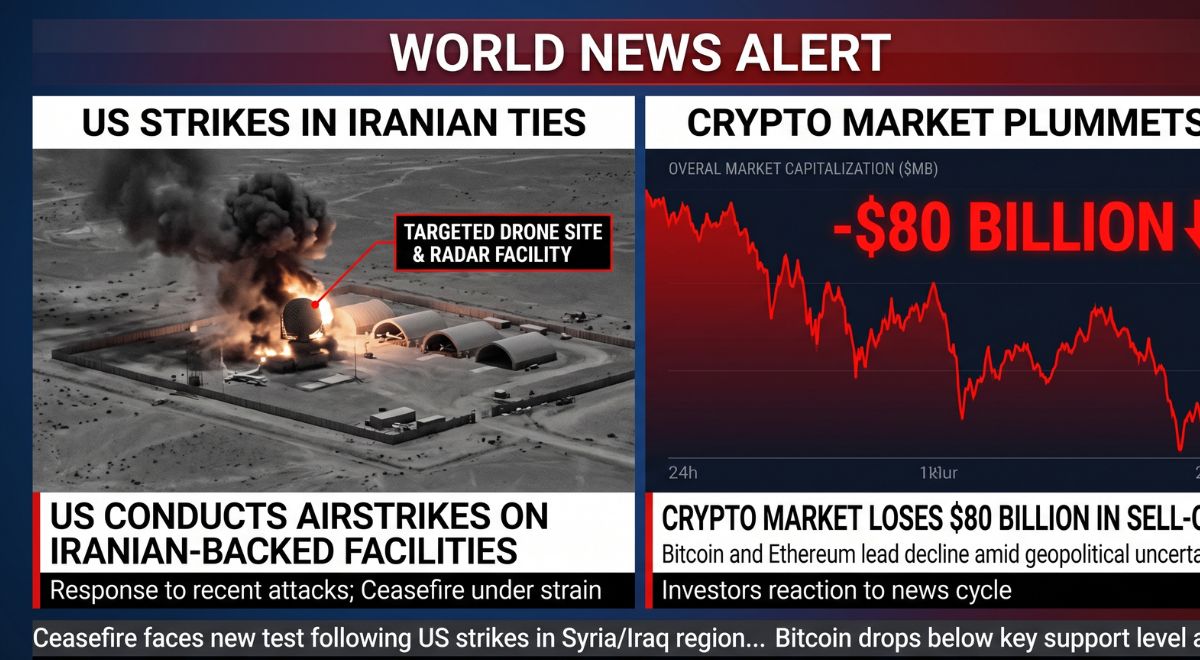
The United States carried out targeted military strikes against Iranian drone facilities and air defense systems over the weekend, escalating tensions despite an existing ceasefire agreement and triggering significant volatility across global financial markets.
According to US Central Command (CENTCOM), the operation targeted radar installations and drone command centers located in Goruk, Qeshm Island, and areas near Bandar Abbas. The strikes were described as measured defensive actions following the reported downing of a US MQ-1 surveillance drone and increased activity from Iranian one-way attack drones near the Strait of Hormuz.
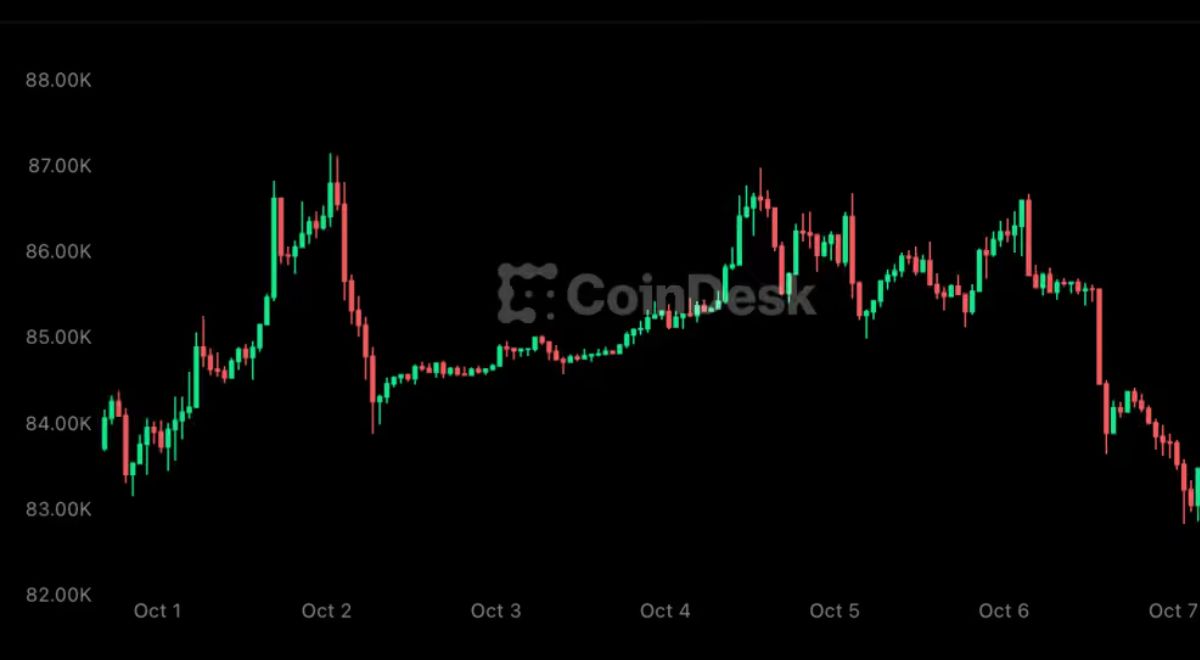
The military developments sent shockwaves through cryptocurrency markets, wiping approximately $80 billion from the sector’s total market capitalization within 24 hours. Bitcoin fell sharply, approaching the $73,000 level as investors reacted to growing geopolitical uncertainty.
Table of Contents
ToggleRising Tensions Challenge Fragile Ceasefire
The latest confrontation unfolded between May 27 and May 31, 2026. US forces initially intercepted four Iranian drones, a figure later updated to five, before launching follow-up strikes against drone infrastructure and radar systems.
CENTCOM stated that the operation was intended to safeguard US personnel and maintain regional stability, emphasizing that the actions were defensive in nature.
The incident represents one of the most significant challenges yet to the ceasefire agreement brokered on April 8. The truce followed a major wave of coordinated US and Israeli airstrikes against Iran that began on February 28. Since then, both Washington and Tehran have repeatedly accused each other of breaching ceasefire terms.
Iran’s Islamic Revolutionary Guard Corps (IRGC) claimed it responded by targeting a US military installation, although details surrounding the alleged strike remain disputed. The IRGC also warned that continued US military operations could provoke a stronger response.
The renewed tensions are particularly concerning because they involve the Strait of Hormuz, a strategic maritime route responsible for transporting nearly 20 percent of the world’s daily oil supply.
Cryptocurrency Markets React to Geopolitical Risk
The sharp decline in digital asset valuations reflects a broader trend that has accompanied the US-Iran conflict since it intensified in February 2026. Previous escalations have repeatedly triggered selloffs across cryptocurrency markets, with Bitcoin and Ethereum among the hardest-hit assets.
Analysts note that geopolitical instability often prompts investors to reduce exposure to higher-risk assets, leading to capital outflows from cryptocurrencies during periods of uncertainty.
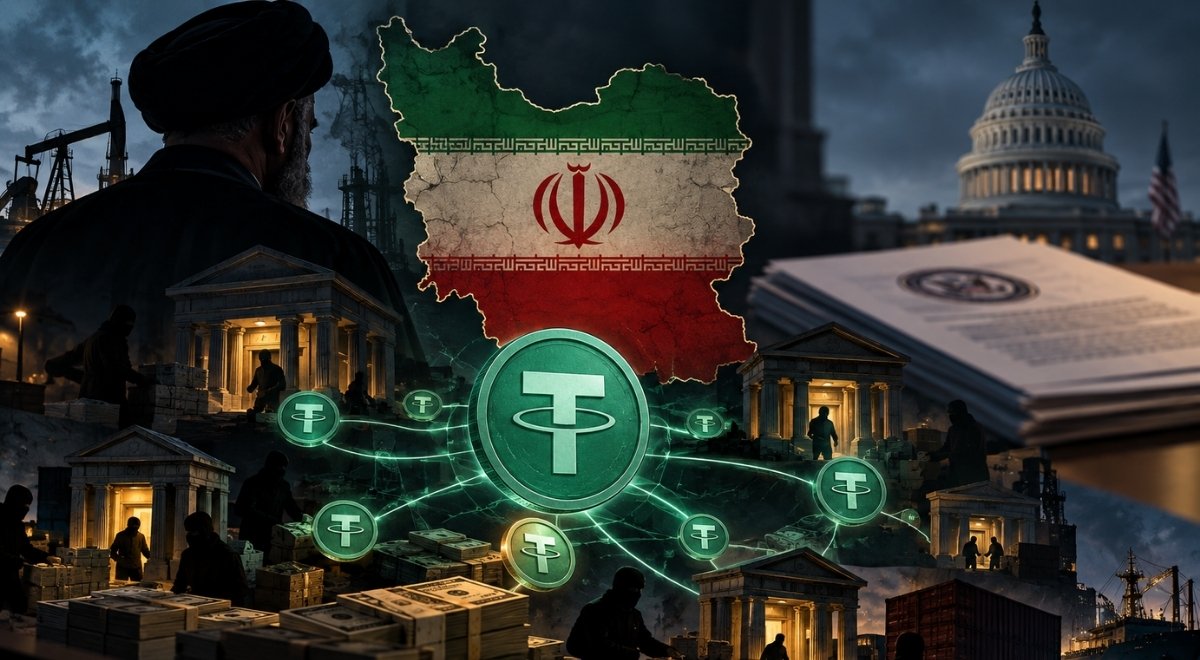
At the same time, Iran’s domestic crypto ecosystem continues to play an important role. Despite periodic internet restrictions and disruptions linked to the conflict, the country’s largest cryptocurrency exchange, Nobitex, has remained operational. The platform’s continued activity suggests that many Iranian citizens are increasingly turning to digital assets as a hedge against currency depreciation and limited access to conventional financial services.
What Investors Should Watch Next
Market participants are closely monitoring developments around the Strait of Hormuz, where any further escalation could have far-reaching economic consequences.
A disruption to energy shipments through the waterway would likely drive oil prices higher, potentially fueling inflationary pressures across global markets. Higher inflation expectations could reduce the likelihood of interest-rate cuts by major central banks, creating additional headwinds for risk-sensitive assets such as cryptocurrencies.
The future of the April 8 ceasefire remains the key factor influencing market sentiment. While both sides continue to characterize their actions as defensive, repeated military exchanges raise questions about the durability of the agreement.
For investors, the distinction is critical. Financial markets can often absorb localized and limited conflicts. However, prolonged or open-ended escalation involving Iran—given its strategic influence over one of the world’s most important energy corridors—could introduce a much higher level of uncertainty across both traditional and digital asset markets.