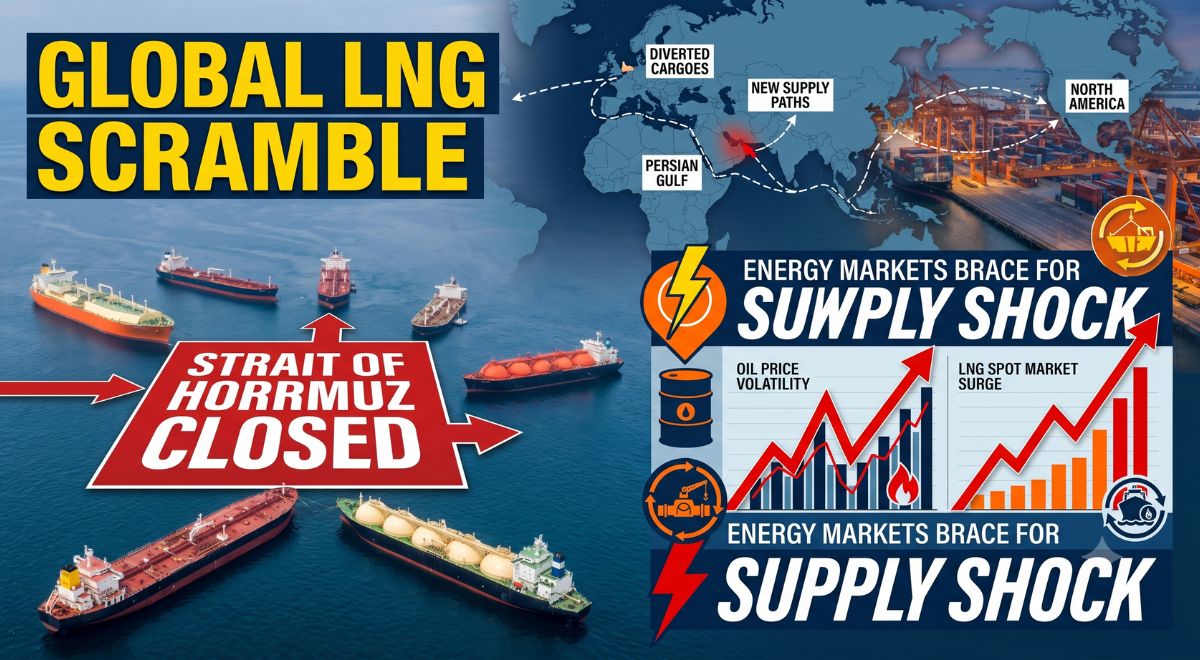
The escalating conflict in the Middle East has intensified pressure on global energy markets, with the closure of the Strait of Hormuz disrupting critical oil and liquefied natural gas (LNG) shipments and prompting a fierce competition for US energy supplies.
The strategic waterway, which serves as a major transit route for crude oil and LNG exports from Gulf producers, has effectively halted a significant portion of shipments from Qatar and the UAE. Analysts estimate that nearly one-fifth of global LNG supply has been impacted, raising concerns about a potential worldwide gas shortage.
As Middle Eastern exports face disruption, buyers in Europe and Asia are increasingly turning to the United States for alternative LNG supplies. The surge in demand has intensified competition between the two regions, driving noticeable price divergences between European and East Asian gas markets compared with US benchmarks.
The supply disruption marks a shift from a regional geopolitical crisis to a broader global economic challenge. Energy traders and policymakers are closely monitoring the situation amid fears that prolonged instability could create ripple effects across international markets and industrial supply chains.
Meanwhile, market sentiment has become increasingly bullish on crude oil prices. Prediction market data shows the probability of oil reaching a new all-time high by September 30 has risen to 17%, up from 15% a day earlier. Expectations for a record high by June 30 remain limited at 2.8%, while year-end forecasts continue to assign a 24% probability.
The rise in oil price expectations reflects growing concerns that ongoing supply constraints and geopolitical uncertainty could tighten global energy markets further in the coming months.
Investors will be watching developments in the Middle East closely for signs of either escalation or de-escalation. Market participants are also awaiting potential responses from major energy organizations, including OPEC and the International Energy Agency (IEA), as well as any measures aimed at stabilizing LNG flows and securing alternative supply routes.